
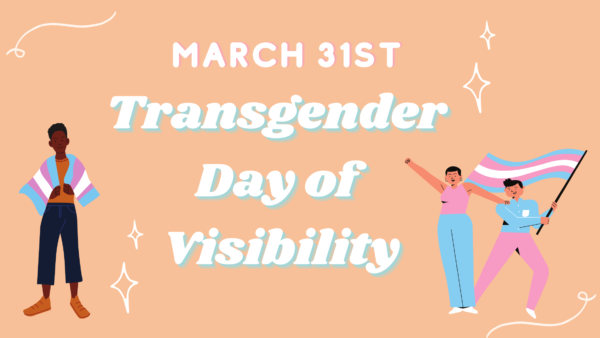
On March 31, we observe Transgender Day of Visibility (TDOV) — a powerful, annual moment to uplift and celebrate transgender and nonbinary lives. This day is not just about recognition; it’s about community, resilience, and the ongoing work for justice.
What Is TDOV — and Why It Matters
The Current Moment: Why 2026 Calls for Visibility
Voices of Wisdom: What Trans Elders Teach Us
GLAAD highlights a powerful piece from six community elders, those who reflect generation-spanning strength, creativity, and resilience.
How to Mark TDOV — in 2026 and Beyond
If you’re thinking about how to celebrate or observe TDOV, consider:
- 1
Share Trans Stories
➡️ Use your platform, whether that be social media, blog, or newsletter to amplify the voices of transgender people, especially from underrepresented communities.
➡️ Share their art, writing, videos, or personal reflections. - 2
Educate Yourself & Others
➡️Use GLAAD’s Media Reference Guide to understand respectful and accurate language.
➡️For reporters or content creators: include their voices in your stories, not just “about” them.
- 3
Support Trans-Led Organizations
➡️ Donate to or volunteer with transgender advocacy groups, whether local or national.
➡️ Elevate campaigns that defend transgender rights, health care access, and safety.
- 4
Create Safe Spaces
➡️ Whether at work, school, or in your community: commit to making spaces more inclusive.
➡️ Encourage conversations about gender, respect for pronouns, and allyship.
A Call to Action & Reflection
As we celebrate Transgender Day of Visibility in 2026, let’s center gratitude, affirmation, and movement. Let’s make space for transgender joy, not just survival. Let’s live up to the vision Rachel Crandall had when she founded this day: a world where they don’t just exist, but thrive.
To every transgender person reading this: You are seen. You matter. Your life is worth celebrating, every single day.
To allies: Your voice matters too. Use it. Speak up. Stand with your community, not just today, but always.
Reading Recommendations
Want to read a book by or about trans and gender non-conforming people? Here are a few staff recommendations to get you started.
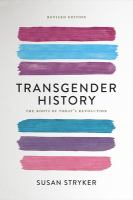
Transgender History: The Roots of Today’s Revolution by Susan Stryker
Covering American transgender history from the mid-twentieth century to today, Transgender History takes a chronological approach to the subject of transgender history, with each chapter covering major movements, writings, and events. Chapters cover the transsexual and transvestite communities in the years following World War II; trans radicalism and social change, which spanned from 1966 with the publication of The Transsexual Phenomenon, and lasted through the early 1970s; the mid-’70s to 1990-the era of identity politics and the changes witnessed in trans circles through these years; and the gender issues witnessed through the ’90s and ’00s.
Transgender History includes informative sidebars highlighting quotes from major texts and speeches in transgender history and brief biographies of key players, plus excerpts from transgender memoirs and discussion of treatments of transgenderism in popular culture.

Gender Outlaw: On Men, Women, and the Rest of Us by Kate Bornstein
Part coming-of-age story, part mind-altering manifesto on gender and sexuality, coming directly to you from the life experiences of a transgender woman, Gender Outlaw breaks all the rules and leaves the reader forever changed.26 black-and-white illustrations.
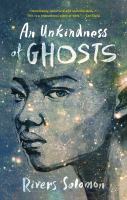
An Unkindness of Ghosts by Rivers Solomon
Part coming-of-age story, part mind-altering manifesto on gender and sexuality, coming directly to you from the life experiences of a transgender woman, Gender Outlaw breaks all the rules and leaves the reader forever changed.26 black-and-white illustrations.

Detransition, Baby by Torrey Peters
Reese almost had it all: a loving relationship with Amy, an apartment in New York City, a job she didn’t hate. She had scraped together what previous generations of trans women could only dream of: a life of mundane, bourgeois comforts. The only thing missing was a child. But then her girlfriend, Amy, detransitioned and became Ames, and everything fell apart.
This provocative debut is about what happens at the emotional, messy, vulnerable corners of womanhood that platitudes and good intentions can’t reach. Torrey Peters brilliantly and fearlessly navigates the most dangerous taboos around gender, sex, and relationships, gifting us a thrillingly original, witty, and deeply moving novel.
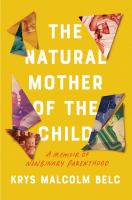
The Natural Mother of the Child: A Memoir of Nonbinary Parenthood by Krys Malcom Belc
As a nonbinary, transmasculine parent, Krys Malcolm Belc has thought a lot about the interplay between parenthood and gender. Giving birth to his son Samson clarified his gender identity and allowed him to project a more masculine self. And yet, when his partner Anna adopted Samson, the legal documents listed Belc as “the natural mother of the child.”
The Natural Mother of the Child is the story of a person moving past societal expectations to take control of his own narrative, with prose that delights in the intimate dailiness of family life and explores how much we can ever really know when we enter into parenting.
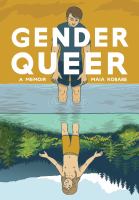
Gender Queer: A Memoir by Maia Kobabe
In 2014, Maia Kobabe, who uses e/em/eir pronouns, thought that a comic of reading statistics would be the last autobiographical comic e would ever write. At the time, it was the only thing e felt comfortable with strangers knowing about em. Now, Gender Queer is here. Maia’s intensely cathartic autobiography charts eir journey of self-identity, which includes the mortification and confusion of adolescent crushes, grappling with how to come out to family and society and more.
Started as a way to explain to eir family what it means to be nonbinary and asexual, Gender Queer is more than a personal story: it is a useful and touching guide on gender identity,what it means and how to think about it for advocates, friends, and humans everywhere.
Resources
Here are some helpful tools and reading if you want to go deeper: