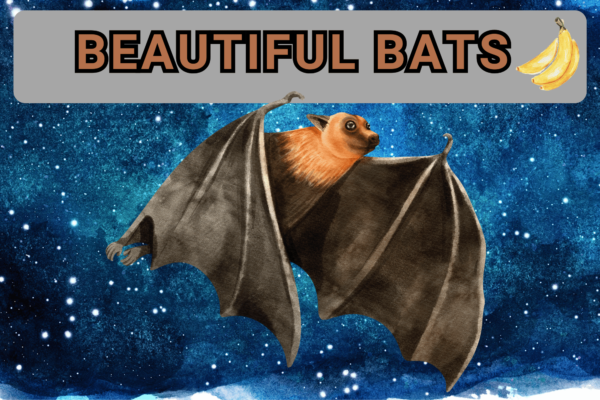
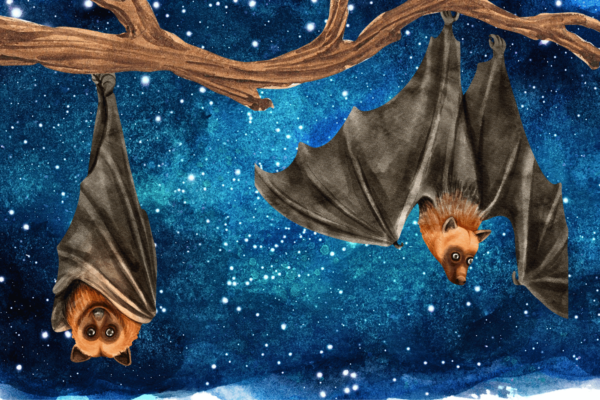
Bats are beautiful, sophisticated, intelligent and ubiquitous mammals, yet they are often misunderstood due to widespread harmful myths and legends. It is very important to celebrate bats because they are endangered, and are requisite to the survival of our planet. International Bat Appreciation Day is celebrated every year on April 17 (and Bat Appreciation Week falls later in the season, in late October) so this is the perfect time to learn more about one of the world’s most mysterious creatures, the bat!
Hello, my name is Miss Sara and in this blog, I will provide many fascinating and educational facts about bats, including a link to an article detailing their extremely unique reliance on a combination of hearing and sight in order to locate their prey. Next there will be a chart illustrating bat anatomy, the science of bat echolocation, a few different bat topics taken from Maryland Department of Natural Resources as well as a chart illustrating the 10 species of bats found in Maryland. Also highlighted is one of our main CCPL children’s databases, National Geographic Kids, and some entertaining and educational children’s resources from our CCPL catalog.
Important Resources
Below are interesting and educational facts about bats (facts pulled from various website sources, which are cited and linked below):
Web site Sources
Below is an article detailing the visual acuity of bats, courtesy of optimax.co.uk:
Blind as a Bat: How Much Truth is Actually in the Saying?
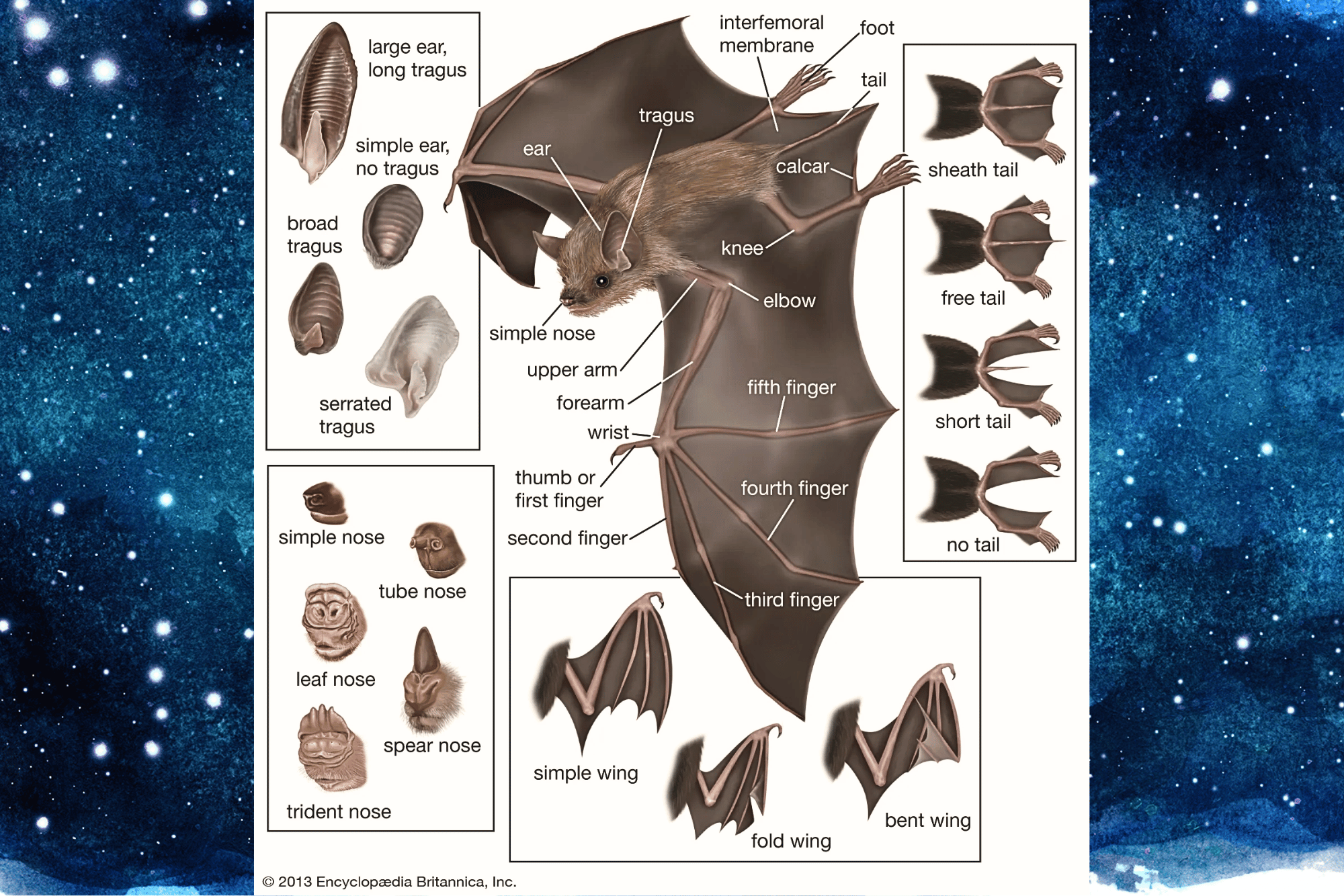
Below is a website detailing bat echolocation, courtesy of Maryland Department of Natural Resources:
The Science of Bat Echolocation
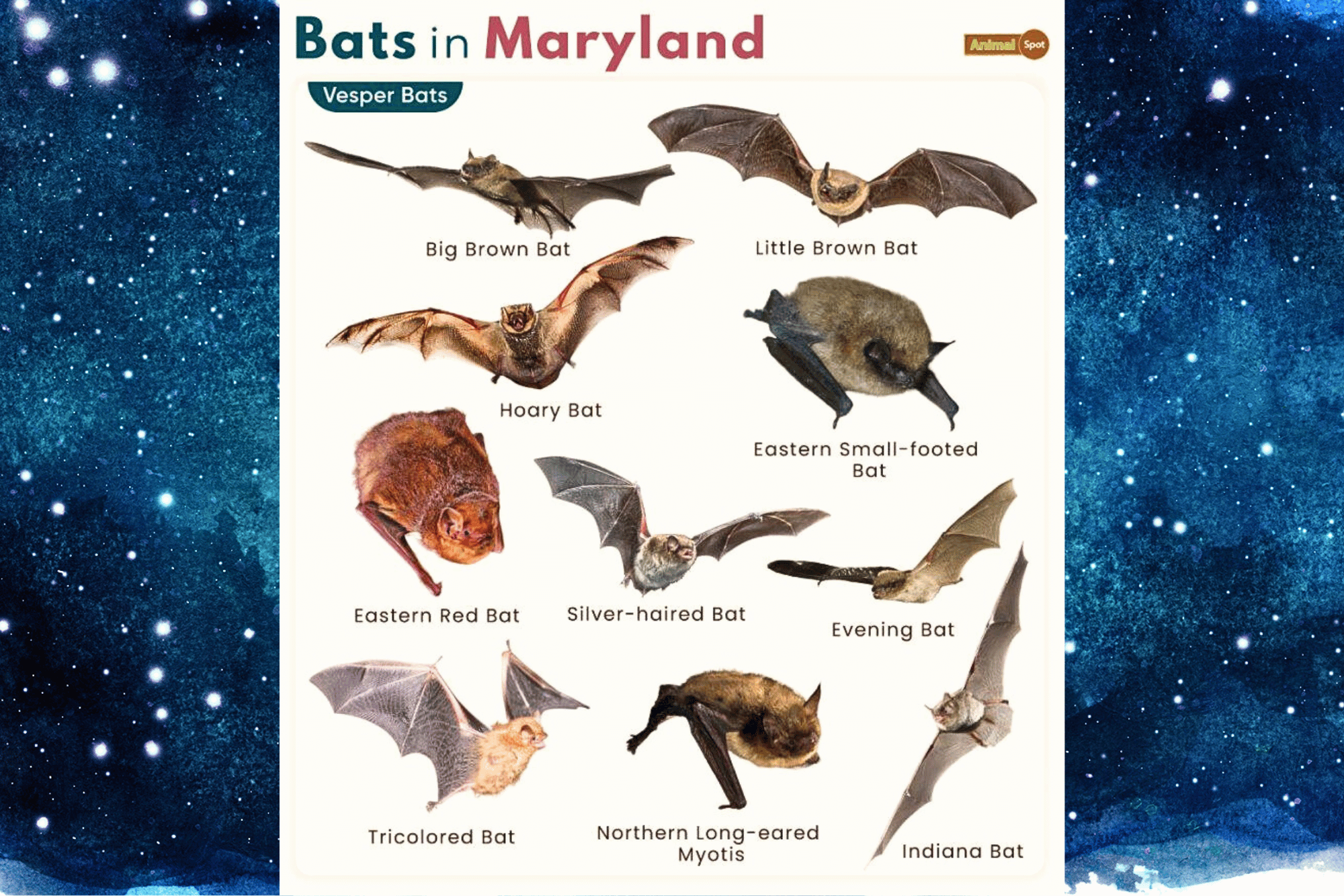
Below is a website listing the 10 species of bats found in Maryland, courtesy of Maryland Department of Natural Resources. Click on each species to learn more:
Guide to Maryland’s Bats
Below is a chart illustrating the 10 species of Maryland bats, courtesy of Animal Spot:
Image/Chart Source:
Additional Resources:
Click on the link below to explore our children’s database, and search for all things bats:
Engage kids and young students to broaden their educational horizons with reputable, special, authoritative, and age-appropriate digital content that brings them the world in a way they have never seen before. National Geographic Kids will take them on amazing adventures in science, nature, wildlife, culture, geography, archaeology, and space.
*All book cover photos are from Goodreads/all title descriptions are from the CCPL COSMOS website.
You may also check out our CCPL catalog for both entertaining and educational children’s resources on bats and general bat conservation, such as:
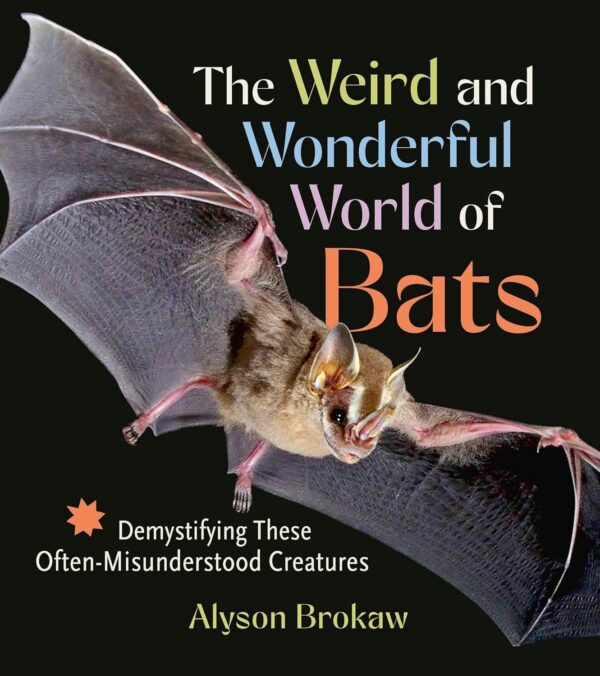
The Weird And Wonderful World Of Bats: Demystifying These Often-Misunderstood Creatures by Alyson Brokaw
In this fascinating science book, a behavioral and bat ecologist reintroduces readers to bats, redeeming their historically bad reputation. These woefully misunderstood creatures dwell in darkness, inspire fear, and threaten danger. They’ve been viewed as the pawns of evil deities and taken the undeserved blame for the spread of deadly viruses. The Weird and Wonderful World of Bats provides a fresh introduction to these curious flying mammals, explaining how they experience the world through unique senses, where and how they fly, the origins of their complex relationships with humans, and how we can learn from them–not only to coexist, but potentially grow healthier and wiser together.
Click HERE to place a hold request
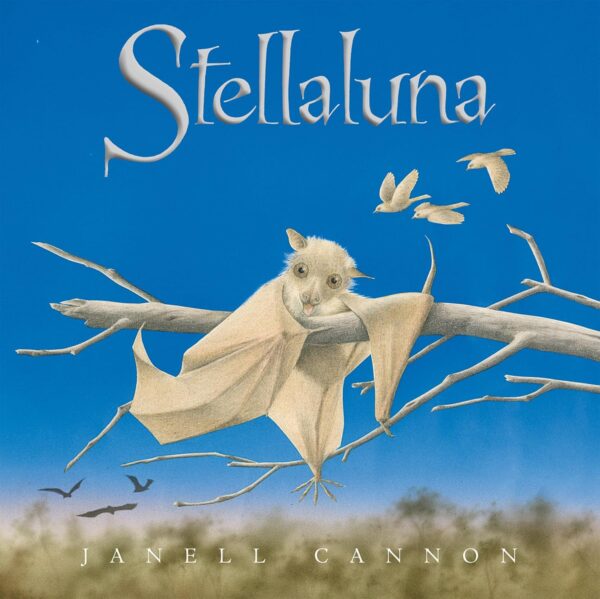
Stellaluna by Janell Cannon
After she falls headfirst into a bird’s nest, a baby bat is raised like a bird until she is reunited with her mother.
Click HERE to place a hold request (1993 original print edition)
Click HERE to place a hold request (2018 republished edition)
Click HERE to place a hold request (2020 RAB audiobook)
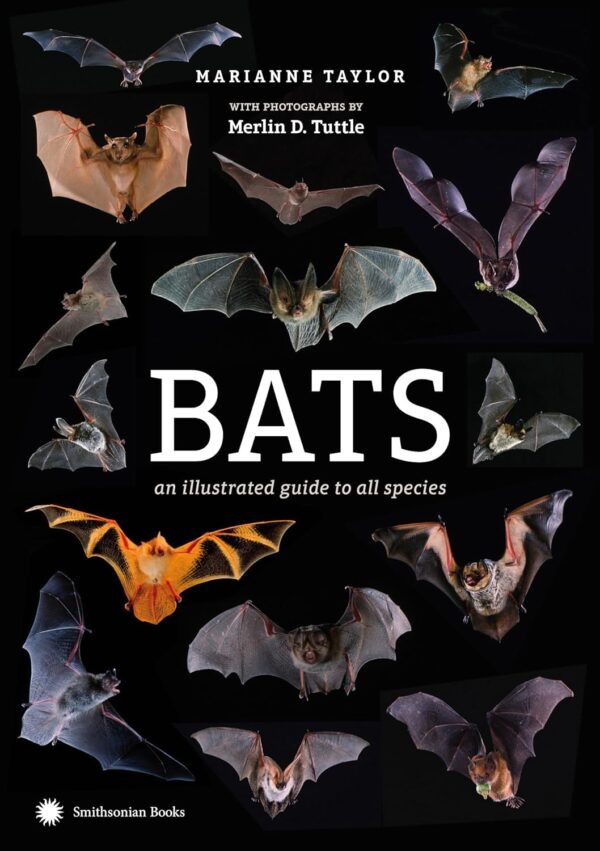
Bats: An Illustrated Guide To All Species by Marianne Taylor and Merlin Tuttle
This book explores bats and their fundamental role in our ecosystems through lavish full-color photographs and lively narrative. From the Giant Golden Crowned Flying Fox, a megabat with a wingspan of more than five feet, to the aptly named Bumblebee Bat, the world’s smallest mammal, the number and diversity of bat species have proven to be both rich and underestimated. Nocturnal, fast-flying, and secretive, bats are difficult to observe and catalog. This richly illustrated handbook presents bats’ evolution, biology, behavior, and ecology. It offers in-depth profiles of four hundred megabats and microbats and detailed summaries of all the species identified to date. Complete with an introduction exploring bats’ natural history and their unique adaptations to life on the wing, Bats includes close-up images of these animals’ delicate and intricate forms and faces, each shaped by evolution to meet the demands of an extraordinarily specialized life.
Click HERE to place a hold request
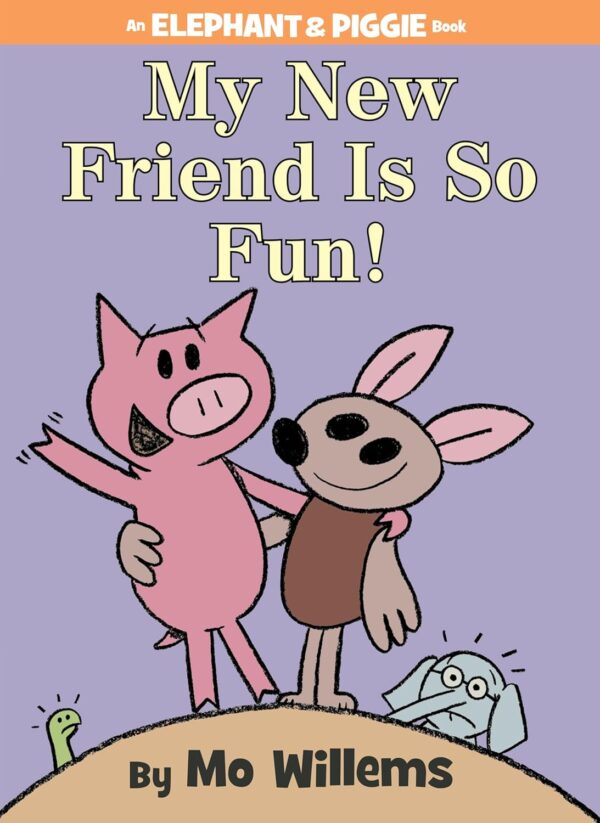
My New Friend Is So Fun! by Mo Willems
Gerald the elephant and Snake fear that Piggie and Brian Bat will have so much fun together, they will no longer need their best friends.
Click HERE to place a hold request
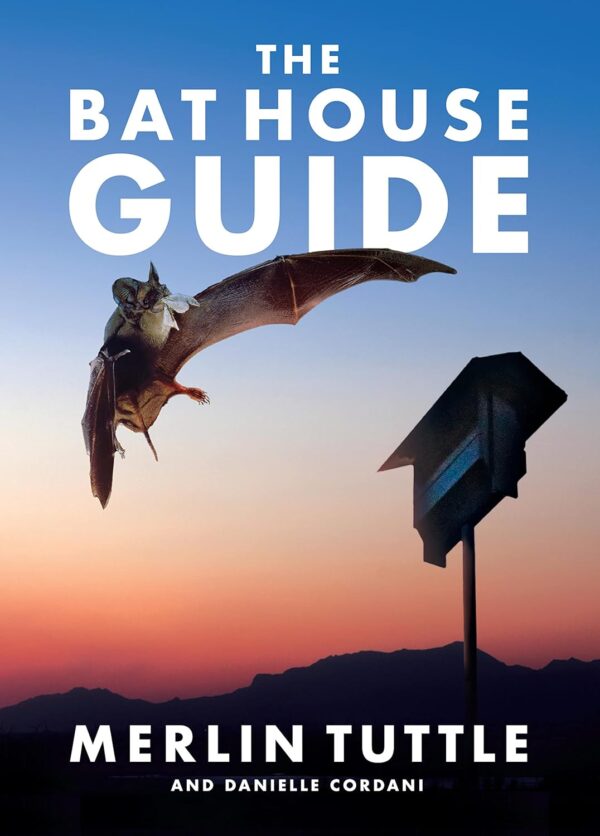
The Bat House Guide by Merlin Tuttle and Danielle Cordani
Why build bat houses? Because bats are essential. They protect our crops, reduce use of pesticides that can cause cancer and dementia, and even help protect us from mosquito-borne diseases such as West Nile. However, they are in alarming decline, often due to loss of natural roosts. Armed with this handy guide from Merlin Tuttle’s Bat Conservation (MTBC), you can have fun helping both bats and your neighborhood. We summarize decades of discoveries by more than a dozen leading experts to provide step-by-step instructions and diagrams for their favorite designs. Some of their conclusions will surprise you. Whether you buy or build bat houses, your success will improve when using this guide. Follow our building advice or look for vendors who meet the high standards required to gain MTBC’s Seal of Approval. And if you achieve exceptional success, or even unexplained failure, let us hear from you at MerlinTuttle.org. Most of all, enjoy your bats and share your experiences with friends and neighbors!
Click HERE to place a hold request
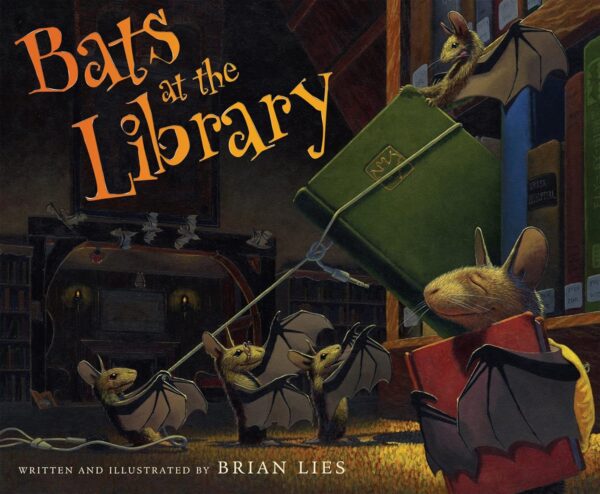
Bats At The Library by Brian Lies
Bored with another normal, inky evening, bats discover an open library window and fly in to enjoy the photocopier, water fountain, and especially the books and stories found there.
Click HERE to place a hold request (2008 original print edition)
Click HERE to place a hold request (2009 picture book on DVD, 11 minutes)
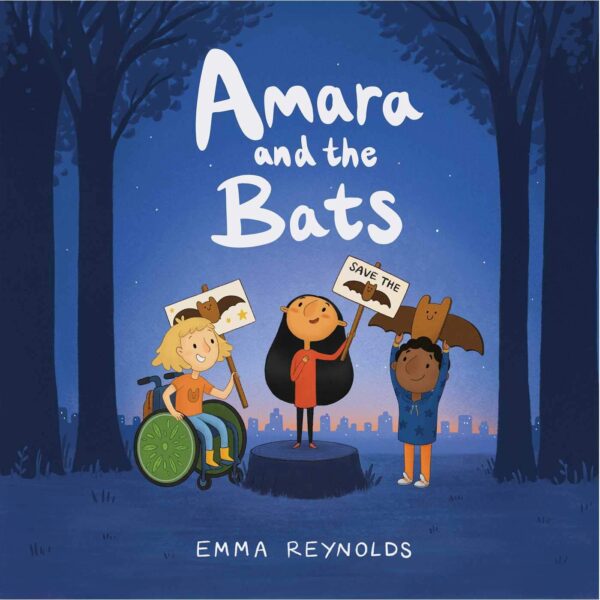
Amara And The Bats by Emma Reynolds
Amara loves bats, so when she learns there are none near her new home due to habitat loss, she overcomes her feelings of helplessness and inspires her community to take action. Includes facts about bats and bat houses.
Click HERE to place a hold request
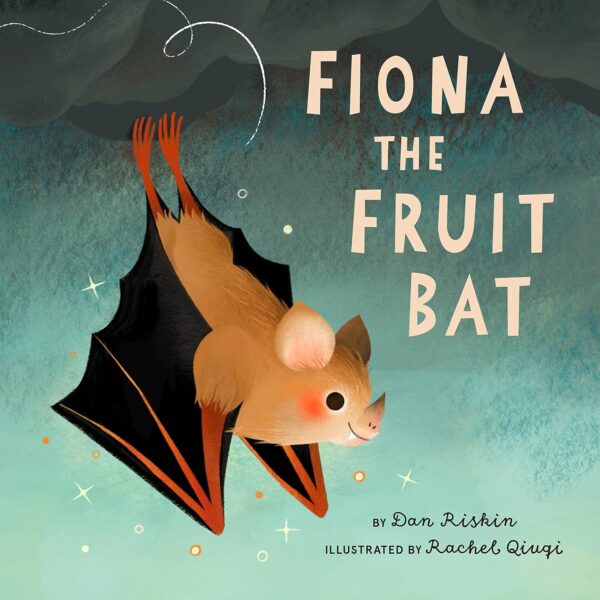
Fiona The Fruit Bat by Dan Riskin
It’s time for Fiona the fruit bat to take her very first flight, but she’s scared. How will she fly when she can’t see in the dark? Mama just says, “listen.” But how will listening help her to see? Then she hears a mysterious sound from deep in her cave. To find out what’s making that noise–and to finally fly–Fiona will have to unlock a secret hidden inside herself. Written by biologist and bestselling author Dan Riskin, and rooted in the real-life biology of short-tailed fruit bats, this adorable story features: The fascinating science behind echolocation, including backmatter pages with information on fruit bats from the author.
Click HERE to place a hold request
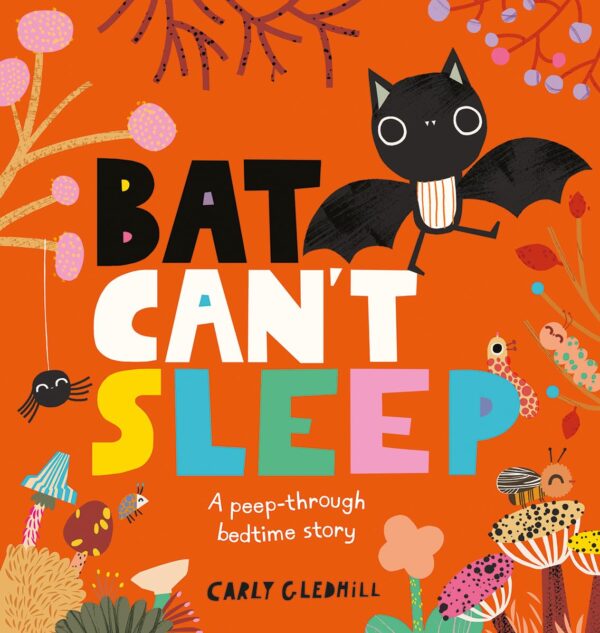
Bat Can’t Sleep by Carly Gledhill
A bouncy, peep-through story–perfect for lively little ones at bedtime. Bat is too excited to sleep. There’s so much to see and do! So off she goes, hopping and skipping, swinging and diving…but will Bat EVER be tired?
Click HERE to place a hold request
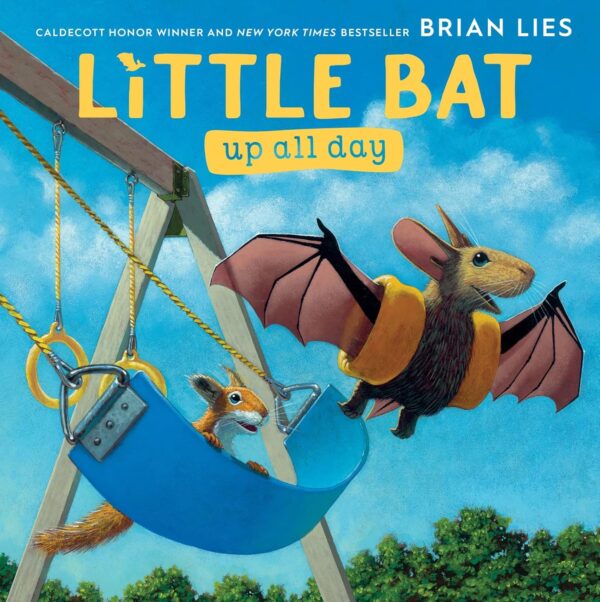
Little Bat Up All Day by Brian Lies
Little Bat has to know. What is daytime like? He has lots of questions about what happens while bats are asleep. Where do the stars go? And just who’s awake in the daytime, anyway? Luckily, Rusty the squirrel is there to show him around. But can Little Bat stay awake all day? And how is it possible for two animals, one nocturnal and one diurnal, to be friends? Join Little Bat and Rusty as they discover how to stay connected–no matter what time of day it is.
Click HERE to place a hold request
Image credits:
Unless otherwise noted and/or linked, all images were designed during the making of this blog.